
1. Social Function & Usage
The Simple Present Tense is used to express:
- General Truths & Scientific Facts: The earth revolves around the sun.
- Daily Routines & Habits: We attend computer network practicum every Wednesday morning.
- Present States: The server room is cool and clean.
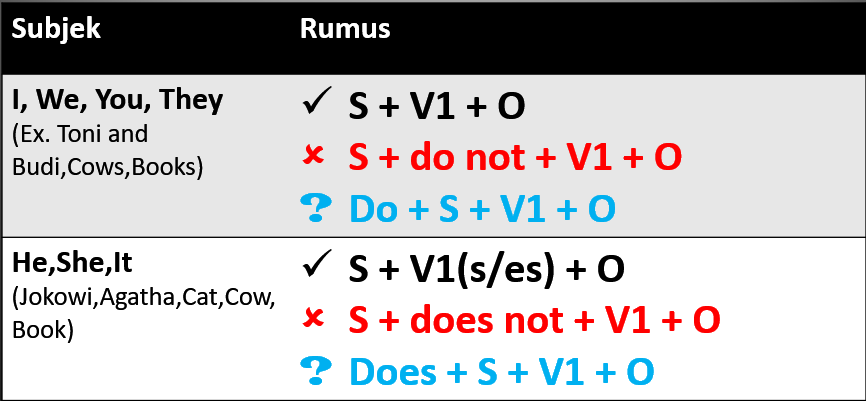
Figure 2.1: Simple Present Tense formula and verb rules.
2. Sentence Formulas: Verbal vs Nominal
A. Verbal Sentences (Active Verbs)
(+) S + V1 (-s/-es) + O/C --> He configures the router.
(-) S + do/does not + V1 + O/C --> He does not configure the router.
(?) Do/Does + S + V1 + O/C? --> Does he configure the router?
(-) S + do/does not + V1 + O/C --> He does not configure the router.
(?) Do/Does + S + V1 + O/C? --> Does he configure the router?
B. Nominal Sentences (To Be: am / is / are)
(+) S + am/is/are + Adjective/Noun --> We are vocational students.
(-) S + am/is/are not + Complement --> The database is not accessible.
(?) Am/Is/Are + S + Complement? --> Is the router connected?
(-) S + am/is/are not + Complement --> The database is not accessible.
(?) Am/Is/Are + S + Complement? --> Is the router connected?
3. Rules for Adding -s / -es for He/She/It
| Verb Ending | Rule | Examples |
|---|---|---|
| -ch, -sh, -s, -x, -o | Add -es | watch → watches, fix → fixes, go → goes |
| Consonant + -y | Change -y to -ies | study → studies, try → tries |
| Vowel + -y | Just add -s | play → plays, buy → buys |
| All other verbs | Add -s | type → types, connect → connects |
🎯 Learning Takeaways:
- Use do/don't for I, You, They, We and does/doesn't for He, She, It.
- Always return the verb to base form when does/doesn't appears in the sentence!